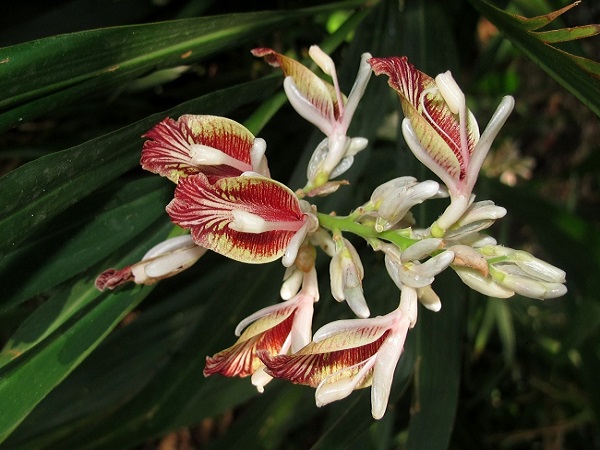
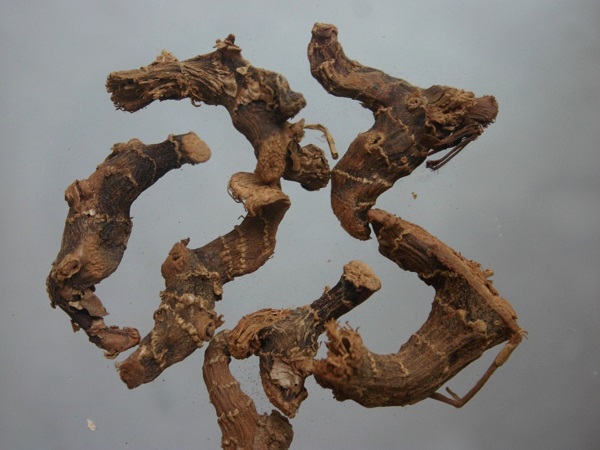
Family |
Zingiberaceae |
English Name |
Lesser Galangal, Snap Ginger |
Malayalam Name |
Chittaratta, Aratha |
Tamil Name |
Perarathai |
Kannada Name |
Chikkadumparaasme |
Telugu Name |
Pedda-dumparashtram |
Hindi Name |
Kulanjan |
Sanskrit Name |
Rasna, Sugandhamoola, Kulanjana |
Trade Name
|
Chittaratha, Aratha |
Part Used |
Rhizome |
In Wild |
No |
Under Cultivation |
Yes |
Temperature |
13 - 36 °C |
Rainfall |
Average annual rainfall of 1645mm |
Farmers |
NA |
Traders |
NA |
Institution |
NA |
Individually |
NA |
State/Region |
Kerala, |
District |
NA |
Nursery Information |
NA |
Yield |
Fresh rhizomes: 8-10 tons/acre, Dry rhizomes : 2-2.5 tons /acre Price/Kg: ₹ 80 - 100 ( as on August 2018) |
Economic of cultivation |
Total cultivation cost/acre: ₹ 33146.74 (as on 2017) |
Quantitative quality standards |
Foreign material: Not more than 2 per cent, Total ash: Not more than 5 per cent, Acid insoluble ash: Not more than 2 per cent Alcohol soluble extractive: Not less than 8 per cent, Water soluble extractive: Not less than 12 per cent, Loss on drying: 5.5 - 6.8 per cent. |
Description |
NA |
Agro technology/Cultivation practices |
Alpinia calcarata grows well in tropical climate.Fertile red loam soil is ideal. Well drained hilly areas and places upto 1400 m altitude are good for its cultivation. It can be cultivated in areas where average maximum and minimum temperatures ranges between 13 - 36 °C and average annual rainfall of 1645mm. It is a shade tolerant crop; grows well as a intercrop in mature rubber plantations and coconut gardens.
Planting-stock production
Vegetatively propagated through freshly collected rhizomes. Freshly harvested rhizomes are made into bits of 5 cm length with at least one sprouting bud are used as the planting material. Almost 500 Kg of fresh rhizome bits are required for planting in an acre of land . Tissue culture methods are also used for its propagation. New shoots along with a portion of rhizome can also be used as propagule.
Field planting
Optimum spacing is 30 cm x 20 cm under poor fertility and 40 cm x 30 cm under good fertility conditions. Planted in pits formed on raised beds and mulched with leaves.
Manuring/Fertilization: Apply 4 tons FYM and 500 kg bone meal per acre at the time of last ploughing. Application of biofertilizers azospirillum @10 kg/ha and in situ green manuring with cowpea are beneficial for the crop.
Carryout gap filling, within one month, if required; remove weeds two months after planting followed by topdressing, earthing up and mulching. Thereafter no weeding is required as the crop smothers the weeds.
Pest: Usual pests includes stem borer and leaf eating caterpillars. If the problem persists specialists may be consulted. Spraying 2.5% neem kernel suspension is beneficial to control the pests.
|
Harversting |
Though rhizome can be harvested 18 months after planting, ideal time for high yield and quality is
36 - 42 months after planting. Since the roots are well ramified in the soil, harvesting is difficult. Cut and remove the shoot portion and carefully dig out the rhizomes and roots.
|
Processing |
Harvested rhizomes are cleaned, cut into pieces of 5cm long and dried in sun for 3-5 days to 10 % moisture for marketing. Rhizomes and roots are steam distilled for extracting the essential oil. Fresh rhizomes on steam distillation for 3-5 hours give 0.22% essential oil. The oil recovery on dry weight basis is 0.93%.
|
References |
NA |